
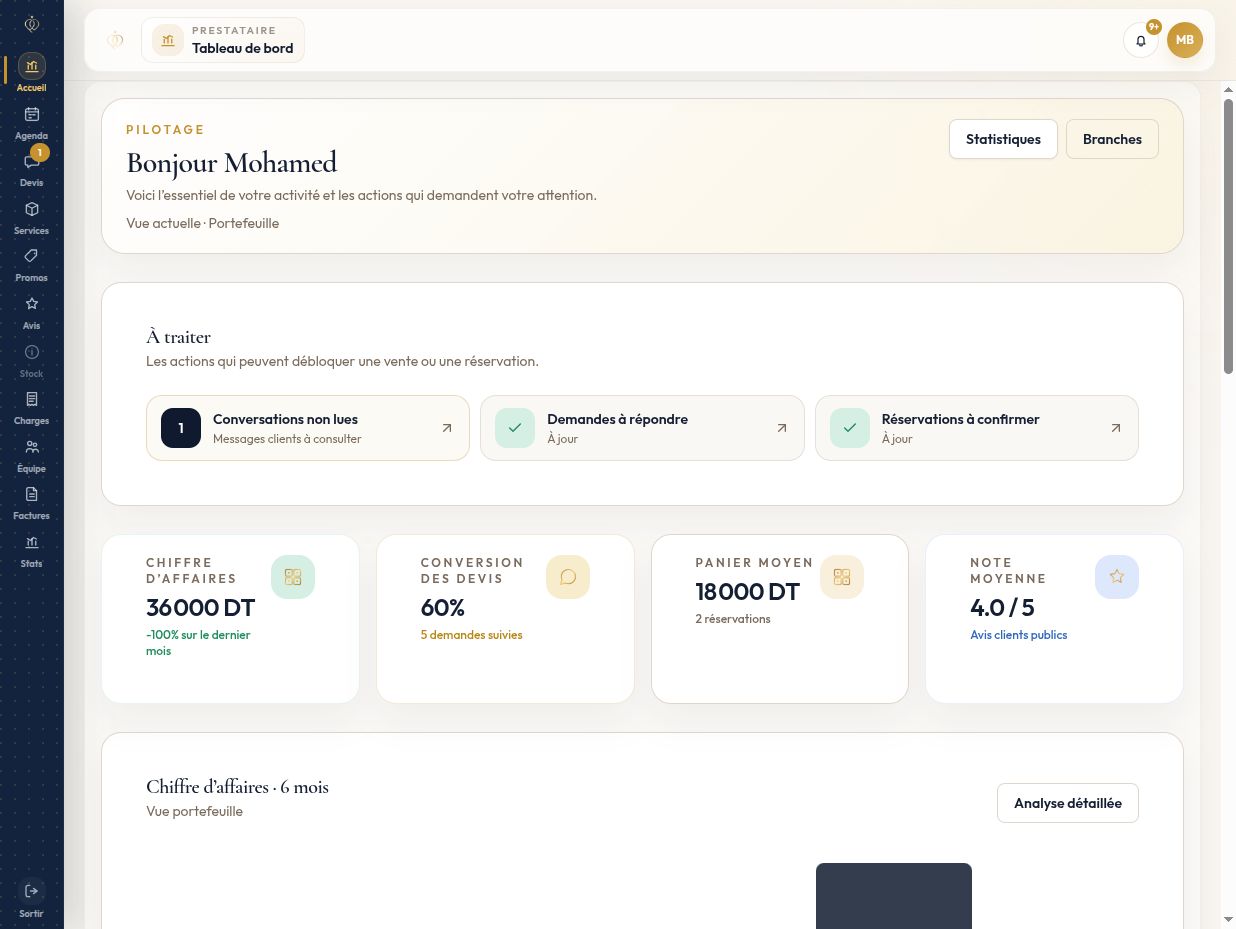
Every supplier quoted differently, so comparison started with rebuilding the quote.
01
What the floor actually looked like
Organisers were not short of options. They were short of a common unit. One venue quoted inclusive of service, another excluded it, a third bundled it into a minimum spend. Comparing them meant rebuilding each quote by hand in a spreadsheet and hoping you had read the footnotes.
And underneath the pricing sat a trust problem. A date was ‘held’ by verbal agreement. A deposit was paid against a promise. When a supplier did not show, the organiser had no recourse and the guests had no dinner.
02
What we changed
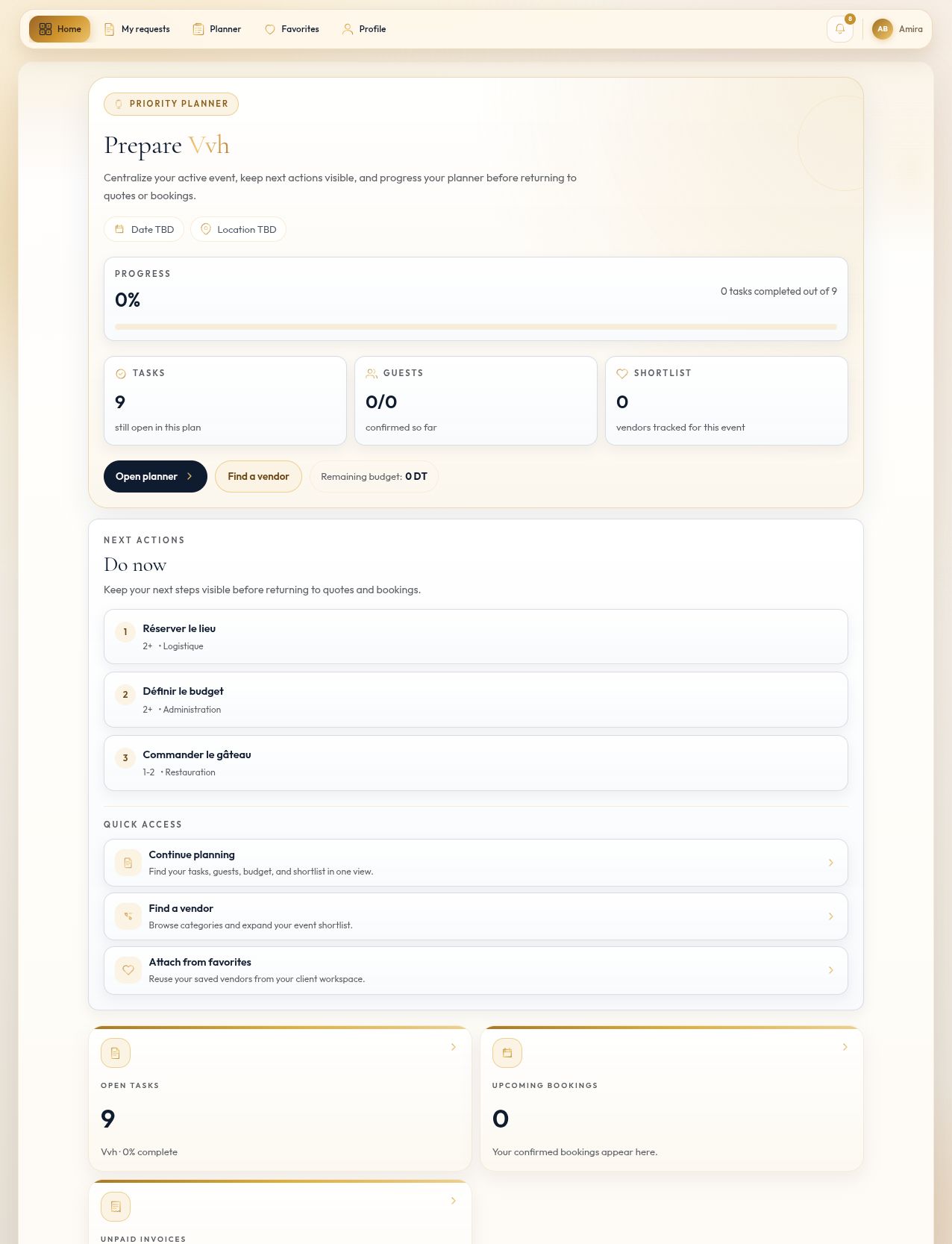
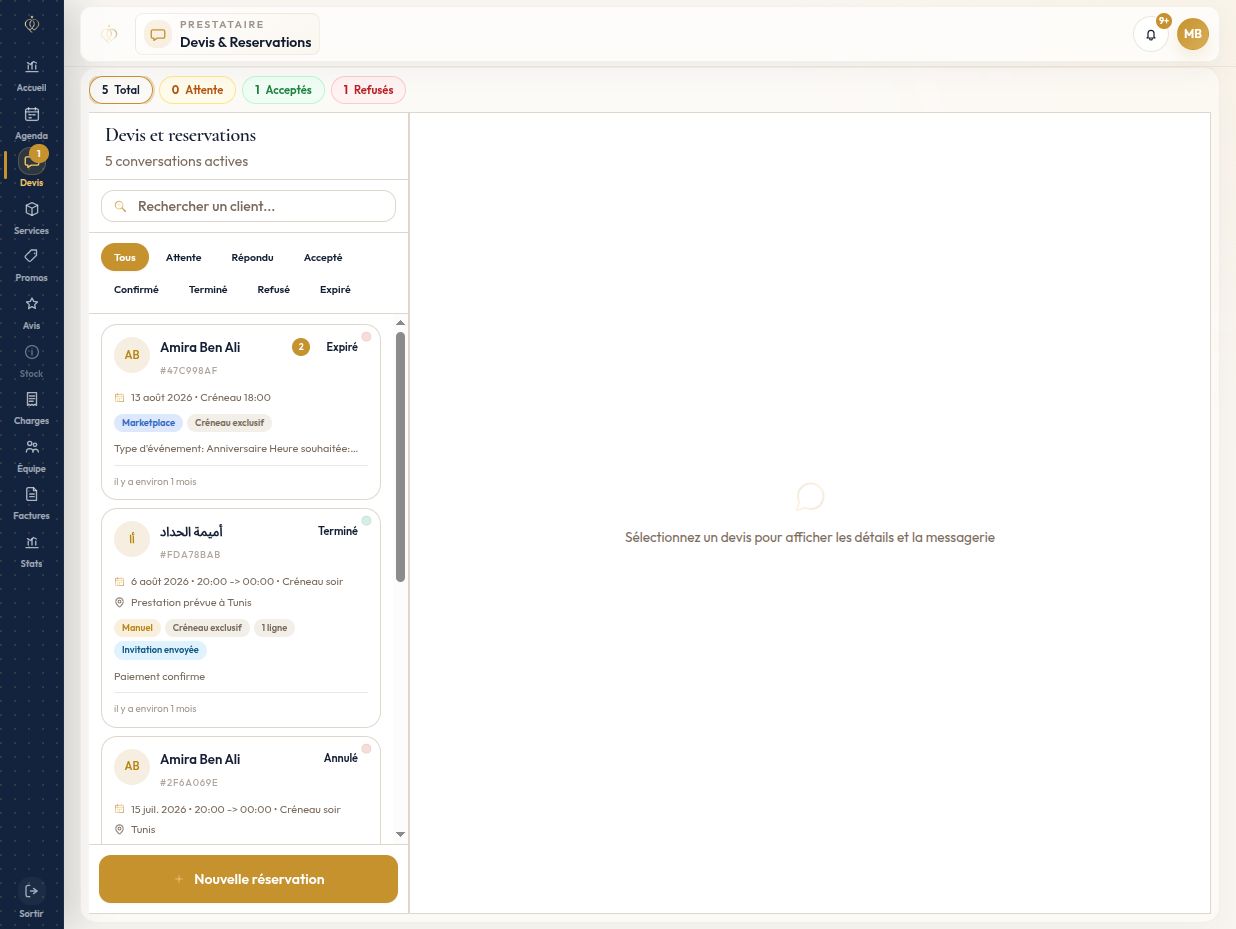
Monasabty imposes a standard quotation schema per service category. Suppliers respond in the same shape, so comparison is arithmetic rather than interpretation. Anything outside the schema has to be an explicit named line item.
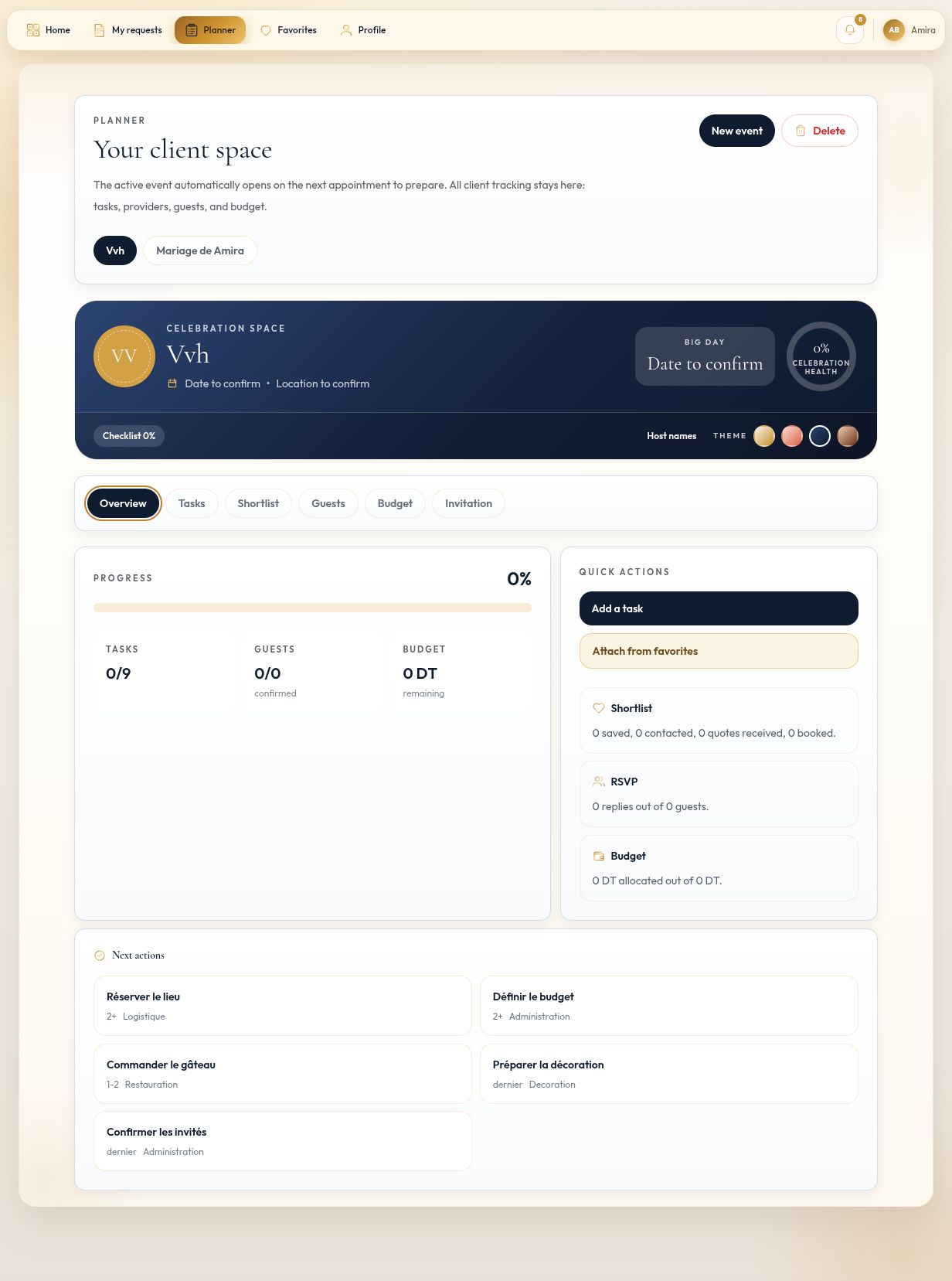
Dates are locked in the system, not in conversation. A reservation holds a real slot in a real calendar and both parties can see its state.
Payments move through milestone escrow. Money releases against delivery, not against optimism. That single change converted ‘do I trust this supplier’ from a judgement call into a structural guarantee.
03
What happened after
Supplier no-shows became a solved category rather than a recurring disaster, because a no-show now means an unreleased milestone.
The unexpected effect was on suppliers: good ones liked it. Standardised quotes meant they stopped losing work to competitors who quoted low by quietly excluding things.
