Local makers were visible online, but their products were scattered across posts, messages and temporary links.
01
What the market actually looked like
The makers already had the hard part: good objects with a point of view. What they did not have was a shared front door. A new collection appeared in a post, orders arrived in direct messages, sizes were confirmed in a second conversation and delivery details lived in somebody’s notes app.
That made discovery feel like work. A customer could want a piece and still lose it between a story expiring, a late reply and a delivery price that had never been stated. The products were local. The buying experience was not yet a market.
02
What we changed
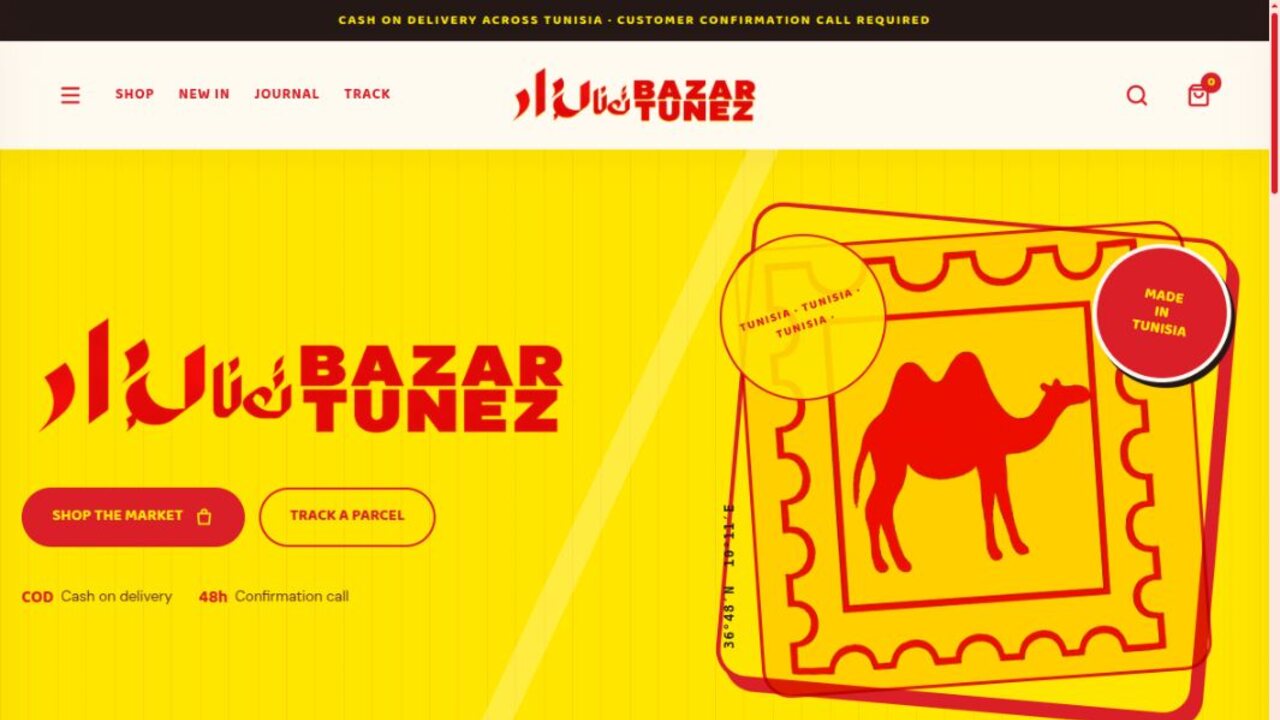
Bazar Tunez turns the storefront into a place to browse rather than a catalogue to decode. Clothing, jewellery, vinyl, crafts, art and accessories sit in one clear surface, with the maker and the story close to the object.
Limited drops make scarcity legible without making the interface frantic. Stock, variants and order status stay connected, while cash on delivery keeps the first purchase familiar.
A human confirmation call is part of the workflow, not a fallback. The address, size and delivery details are checked before the parcel moves, and tracking keeps the customer informed after it leaves the maker.
03
What happened after
The marketplace became useful before checkout. People could return to a drop, follow a maker and understand what was available without starting a new conversation.
For the team behind the storefront, catalogue, inventory and orders moved into one operating rhythm. The market could grow without asking every maker to become their own logistics desk.
