01
What the floor actually looked like
Neighbourhood grocers had been offered apps before and had rejected all of them, for good reasons. The queue does not wait. If logging a tab takes longer than writing a name and a number, the app loses, and every app we saw took longer.
The real exposure was not speed, though. It was that the entire receivables book of a small business existed as one physical object that could be lost, soaked or disputed, and that collecting on it meant an awkward conversation nobody wanted to start.
02
What we changed
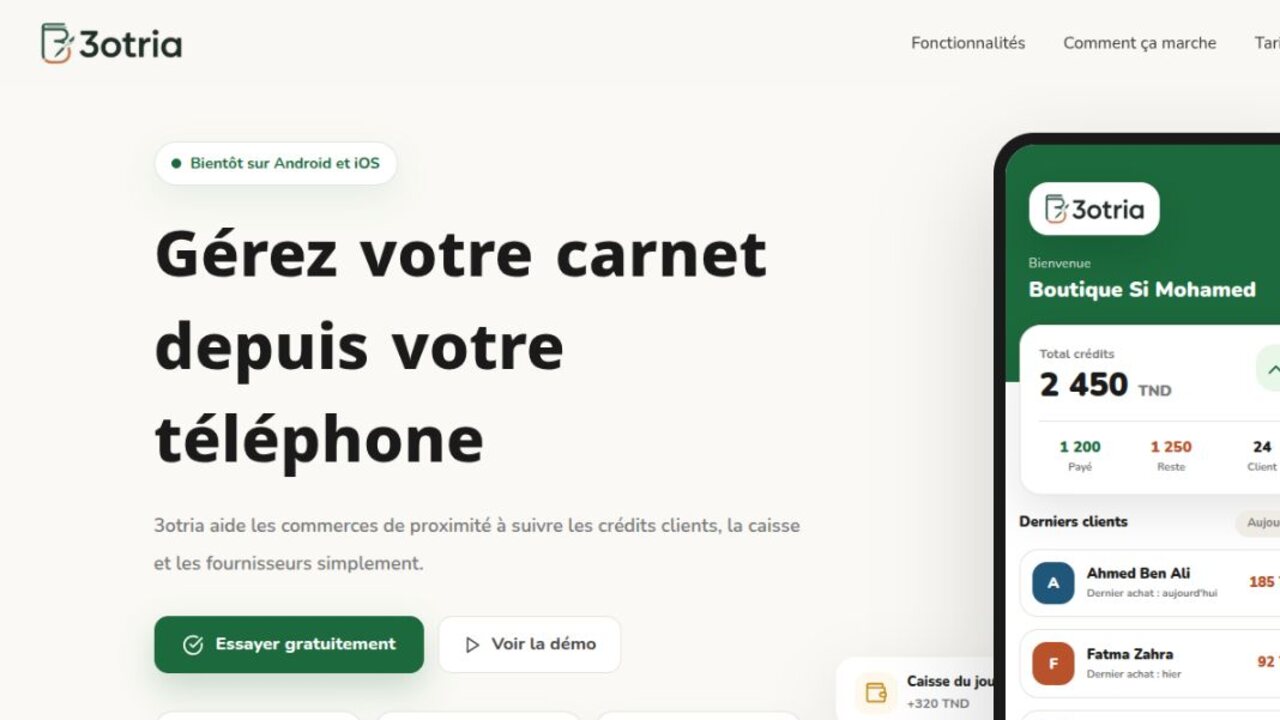
We designed to a stopwatch. Logging a tab is three seconds: the client is a recent face at the top of the list, the amount is a numeric pad, done. No categories, no confirmation dialog, no sync spinner.
Offline is not a degraded mode, it is the normal mode. Every write goes to a local SQLite journal first and reconciles when the signal comes back. The shop does not know or care whether it is connected.
For collections, we replaced the awkward conversation with an automated, respectful SMS in Arabic or French: the customer’s language, a civil tone, no threat. It turns out most people were not avoiding payment. They had forgotten, and nobody wanted to be the one to remind them.
03
What happened after
Debt recovery improved roughly three and a half fold, almost entirely because reminders now happen at all.
The merchants kept the paper carnet for about a month, in a drawer, as insurance. Then they stopped.
